
[RESOURCE] 5 Minute Guide to 5 Figure Income: the Secret of a “Soft Sell”.
It’s all about strategy.

The Soft Sell technique- content which indirectly piques curiosity, motivating the reader into action without using overt persuasive strategies.
Have you ever thought about painting? Just, stay with me, okay? This will clarify the soft sell technique, but you need to keep reading.
So, have you thought about painting?
I was writing product descriptions last night, and I got to this one-
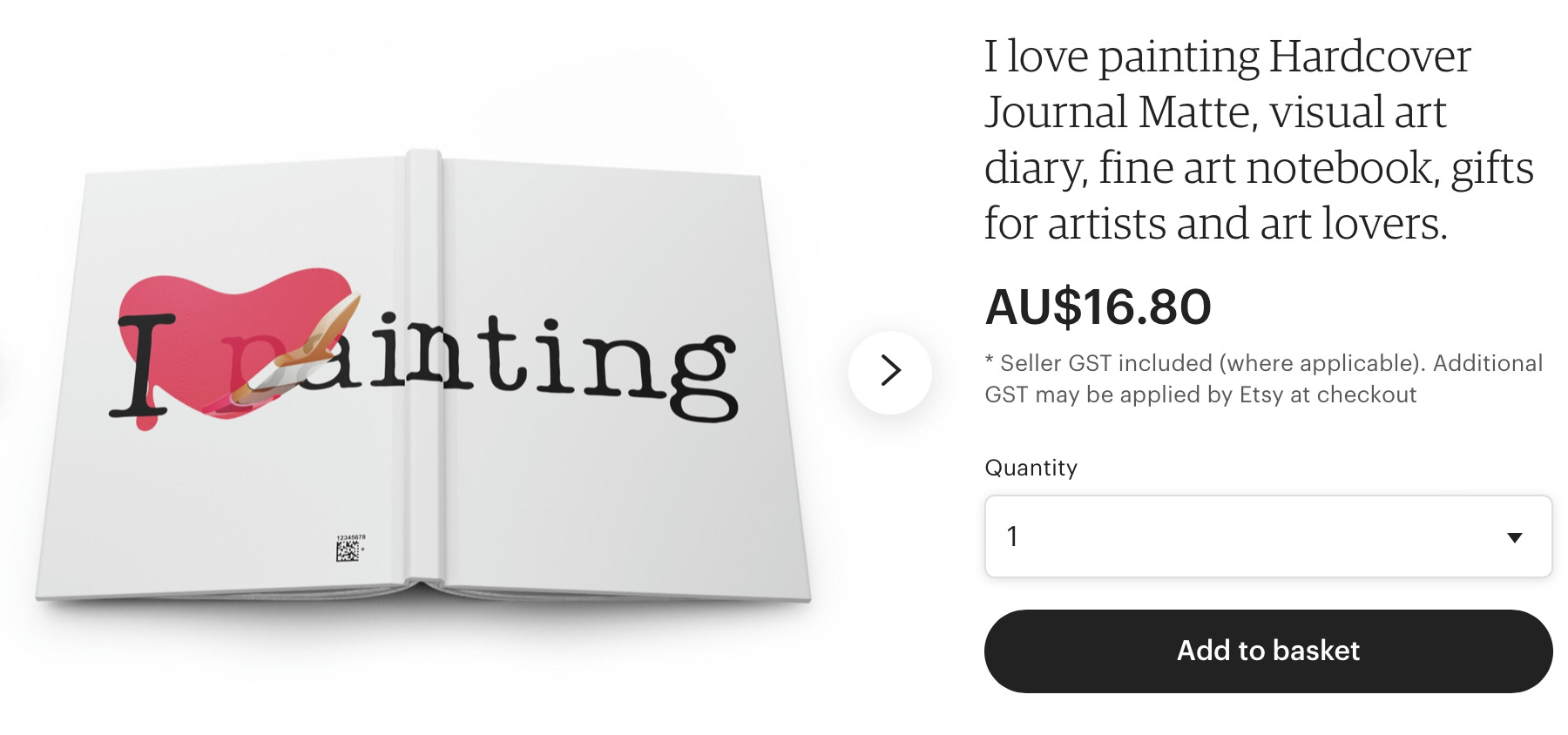
Product descriptions are an interesting piece of copy to write. You can either
sell sell sell,
jot down a literal description…
Or take a more creative route.
Old school Ad man Gary Bencivenga is selling with every word he writes. Because of this, he is a never-fail reference and a wealth of information. Gary’s style works because he appeals to basic instincts, essentially triggering his reader. He is the best teacher I know of when you want to learn the core of marketing and fundamental copywriting strategy.
But Gary is economical with words. Which is fine.
Great, even.
But it’s not how to soft sell.
So, back to painting.
Finger painting, face painting, watching paint dry. Literally everyone loves painting.
The reason why we might universally love painting so much is because it’s an essential part of our evolution as humans.
Painting, quite literally, is in our dna.
Considering the magnitude painting holds for the human race as a whole, would it completely surprise you to learn the art of painting is not, in fact, a human invention?
Archeologists have confirmed it: We borrowed the art of painting from our Neanderthal cousins.
Then we proceeded to keep painting for the next tens of thousands of years.
Don’t quote me, because I’m not a scientist, but Painting, in reality, probably predates humans, which is wild when you think about it.

There are a few things we still do to this day which were taught to us by Neanderthals, like drumming, making weapons and wearing make up, to name a few.
But archeologists have long argued cave painting was a defining characteristic of Homo sapiens.
There’s not a chance Neanderthals did it as well,
no way,
no how.
Their ardency seemed to find its genesis in symbols.
Semiotics, otherwise known as the science of signs, is more than just a first year Arts degree subject.
Signs are language.
And symbols are signs.
Due to the complexity of understanding, interpreting and recreating symbols, cave painting was off the cards for Neanderthals. Only homo sapiens had the brain size and structure which would allow for this element of evolution, namely the ability to record and read language.
Because When you look at any cave art, a story reveals itself. The paintings record life- the hunt, the food, the weapons and most importantly, the people.
Cave paintings also explore artistic technique- like the hand prints of Australia for example.
Imagine you, for the very first time, with no teacher or elder to show you, chewed up ochre and sprayed the resulting paint from your mouth all over the back of your outstretched hand, your palm flat against the rock wall of a cave.
The pure creative imagination and curiosity of life displayed, the core yearning to declare yourself as here and now, “I’m alive”, is wonderful.
How someone, who lives with their land, and honours their way of life, imagines making the very first stencil ever seen in this universe-to put it simply, It’s miraculous.
The First Nation people of terra nullus must never be underestimated.
Our early artists were experimenting with the moving picture as well.
Some more recent cave paintings appear to have been painted twice, only, the second depiction was slightly offset from the first, like a printing which had slipped.
The second rendition painted not-quite-on-top of the first was originally thought to have been an act of preservation. But the precision and uniformity of the miss print nagged at investigating scientists.
Then one of them decided to light a fire in the cave, and look up to the paintings above in an attempt to understand the message calling out to us from the past.
It was the lighting of the fire which showed exactly what those long ago messengers wanted us to see. The offset paintings and the surface of the rock came together, and suddenly, were alive.
Flicker of fire and haze of smoke danced shadows across the paintings. Wild boar, chased by impossibly slim hunters, with spears brandished high, met their demise as though it had only just happened.
The scientists below were struck silent as the hunt above raced wild, while in a long ago millennia, the roasted pig they caught spat fat and blood into a sparking fire.
Our ancestors ate well that day, to celebrate.
With all this to consider, maybe we did invent painting after all. Neanderthals can’t paint antelope running at full stride, or show things to the universe it had never seen before.
Well, yes.
Until…
Homo sapien technology had progressed so much, a cave painting in Spain could accurately be carbon dated. The result placed the painting 20,000 years before the first evidence of homosapiens was ever recorded.
What’s more, these paintings appeared to have meaning. Meaning like, telling a story meaning. Symbolic meaning. Both in what the paintings depicted and where the paintings were found.
Some Neanderthal cave art was discovered deep inside mountains, in the pitch black. This suggests fire was always a crucial element to cave painting.
The deep caverns chosen by the artists were stunning displays of stalactites, luminous waters and mineral rock crystals. Almost church like, telling us the paintings of Neanderthals were treasured.
The discovery rewrote the story of human evolution and blew apart our understanding of who Neanderthals really were.
Since the very first humans gaped their mouths in wonder, watching the very last of the Neanderthals create sourcery on the walls of caves, we have painted.
On ourselves and all over the world.
Did those last enduring Neanderthal teachers know they had to trust us with their most precious of sacraments, or be lost forever in time?
Because They handed us Their drumming,
entrusted us with their make up,
and bestowed upon us the heartbeat of every single art practice since-
their treasured and magical painting.
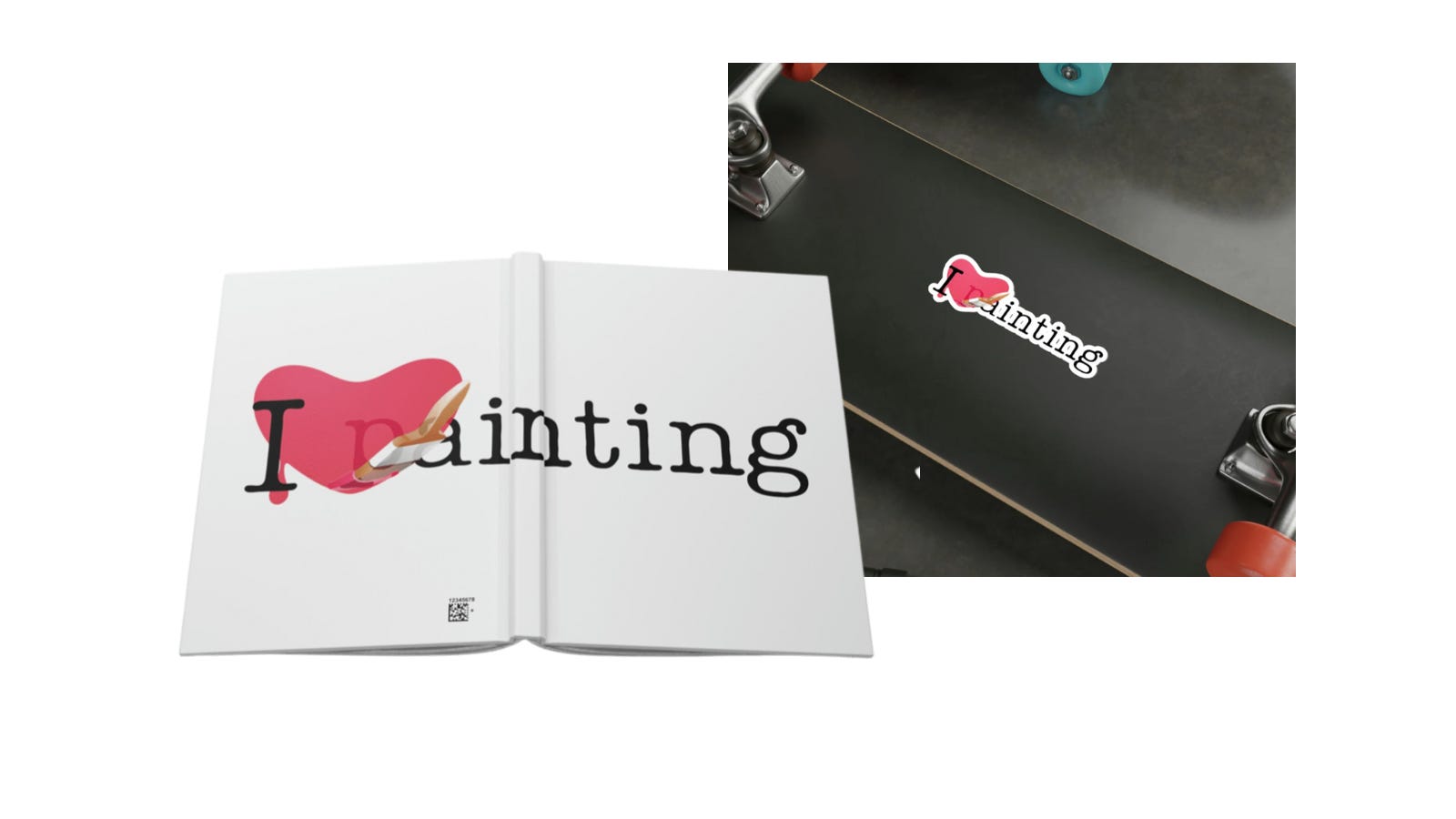
When I look at product descriptions like the one above, I think about Seinfeld’s Elaine, writing for the Peterman catalogue.
Peterman had a preference for the dramatic in his catalogue. Elaine had to sit in his office as he reeled off descriptions of pants and parka’s which sounded like scenes from Harlequin romance novels.
A pained Elaine would fake taking notes and was perpetually affronted by Mr Peterman.
Until one night, in the heat of a crisis, she needs to describe a scene the Peterman way; the only way it seems, to avoid catastrophe. (Or something like that, maybe she had a boyfriend who liked it…if you know what I mean. Either way)
Amazing joke, of course.
Amazing copywriting technique? 100%.
The Peterman catalogue tapped into a fiendish reality- how many ways can you really describe an inanimate object?
For the notebook above, how do you say “nice binding, cool design, works great as a gift for your artsy friend” without sounding exactly like the next listing?

Storytelling.
Every writer tells stories. We’re humans, it’s what we do. You can either paint them on a cave wall, or type them into an email. But it’s the secret to the soft sell technique.
Yep, storytelling IS the soft sell technique.
Tell a story about your product, like the Peterman catalogue. A shirt isn’t loose fit with shell press stud buttons, it’s a symbol of satiated Lust lying crumpled on the floor. It’s stretched taught across the back of a gardener crouched between rows of sunflowers in a sickeningly bucolic scene. It’s a sad memory of the stable hands back home.
Stories sell, softly.
And remember like they always say- be so good at copywriting, they think it was their own idea the whole time.
Ps- find the I ❤️ Painting notebook, complete with product descriptions by clicking here.